Whataboutism is a popular word with a negative meaning. To be accused of whataboutism is to be accused of deflecting instead of taking responsibility for your actions. No self-respecting person or a company wants to be accused of deploying such an obviously bad tactic.
But there is a type of whataboutism with positive connotations – and it deserves our urgent attention. I was thinking about it when considering the recent government policy to offer some chrome smelting companies a 62c/KwH electricity tariff to stay afloat.
Energy regulator, NERSA, approved Eskom’s applications for Glencore-Merafe and Samancor Chrome to be given the tariff following their declaration of hardship and threats of shutting down of whatever was left of South Africa’s chrome smelting capacity.
The risk of losing a strategic industrial base, and the real prospects that we were going to export all of South Africa’s raw chrome ore abroad for smelting, jolted relevant state actors and other stakeholders into action to prevent an already disastrous situation from getting out of hand.
Hundreds of thousands of jobs were already lost in the chrome processing value chain. Many anthracite mines, which supplied reductants to chrome smelters had shut down, shedding thousands of jobs, due to dearth of demand. Thousands more chrome smelter workers were about to be offloaded when the tariff deal was struck.
The crisis offered the government’s economic cluster ministries an opportunity to practically demonstrate their commitment to industrialisation and local beneficiation – things they had spoken about a lot. Minister of Electricity and Energy Kgosientsho Ramokgopa, Minister of Mineral and Petroleum Resources Gwede Mantashe, and Minister of Trade, Industry and Competition Parks Tau had all spoken about the need for local beneficiation.
President Cyril Ramaphosa convinced G20 members during the Johannesburg Summit of the importance of beneficiating minerals at source. The 2026 Mining Indaba held in February was predominantly about local beneficiation.
It was therefore good for the state, through baseload power producer Eskom and energy regulator NERSA, to provide Glencore-Merafe and Samancor a tariff that aligned with government’s policy on reindustrialisation and local beneficiation.
Now, let me turn to whataboutism with a positive slant: What about other consumers of electricity that are at the heart of South Africa’s industrial base? The government and Eskom seem to have opted for a discretionary tariff policy that will be decided on a case-by-case basis.
Companies experiencing hardship are expected to apply. Eskom would then consider their applications and accordingly approach NERSA to approve its preferred price. In other words, the Glencore-Merafe and Samancor process has by default become a pilot of state policy for setting competitive tariffs for strategic industries that hold prospects for jobs, reliable power demand from Eskom and export earnings.
But the outcome for each applicant will not necessarily be the same and the results will not be announced at the same time. Already, the tariff for Glencore-Merafe and Samancor applies for different durations – respectively three and five years.
It has since emerged that Transalloys, the remaining manganese smelter – others had long closed – has shut down pending a decision on its application for a favourable tariff. After this terrible news, many industry players correctly asked: “If Glencore-Merafe and Samancor could get a favourable tariff, what about Transalloys?”
More discrepancies, whether justifiable or not, will raise many whataboutism-type questions. However, if answered properly the whataboutism could lead to sound policy.
So, what can be done? The government must adopt a transparent policy for industrialisation and reindustrialisation, offering a competitive electricity tariff to all heavy manufacturers players whose electricity costs comprise an unbearable percentage of the total cost of production. A threshold for such costs must be established and revised at regular intervals considering market dynamics.
The policy must be proactive; not reactive. It must be applicable to all; not case by case. It must be consistent; not discriminatory or discretionary. It must be transparent and not allow room for manufactured perception that lobbying capabilities supersede the economic growth that South Africa desperately needs. It must shape competitiveness; not belatedly respond to the consequences of failure of our industries to be globally competitive.
A proactive energy policy for industrialisation and reindustrialisation must meet the needs of four types of heavy manufacturers. Those that stopped production because of high electricity tariffs and loadshedding; those that are operational but are struggling to keep up; those that are operational and want to expand capacity, and new investors who see high electricity tariffs as a barrier to entry.
Industrialisation and reindustrialisation cannot happen on a piecemeal basis. While Eskom and NERSA were correct to ensure that Glencore-Merafe and Samancor survived and that disaster was averted, the way these power price deals were negotiated should be treated as exceptional cases. Not as a policy template for industrialisation and reindustrialisation.
Current applications before Eskom and/or NERSA should proceed for processing. But we still need an overarching energy policy for competitive manufacturing industries that support South African mining, jobs and export earnings.
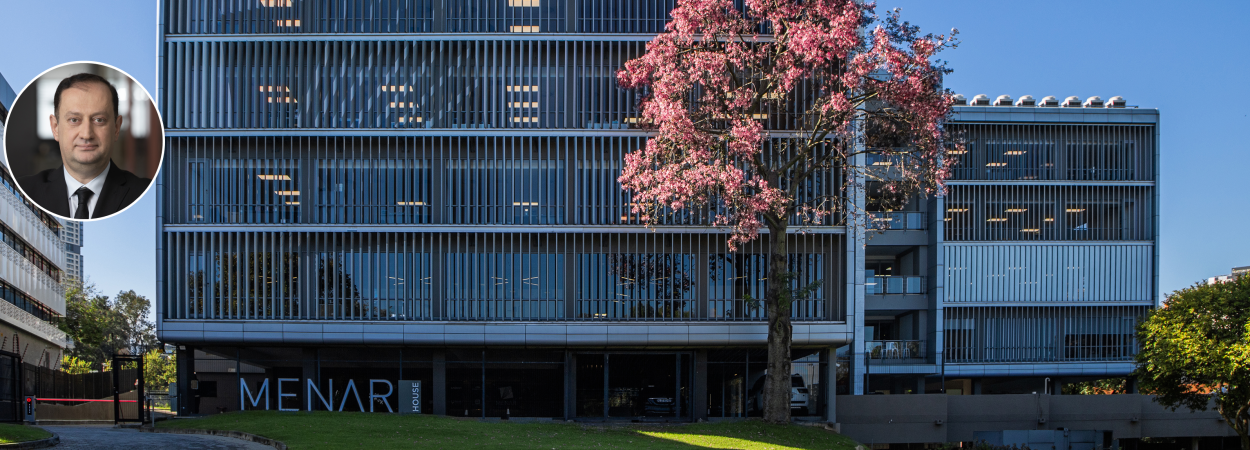
Bayoglu is the MD of Menar, an investment company with interests in ferromanganese production.
This opinion piece was published in the News24: https://www.news24.com/business/opinion/vuslat-bayoglu-why-we-need-a-transparent-power-price-for-all-manufacturers-20260713-0688
Categories: Opinion Pieces
 Vuslat Bayoglu