In reality, Eskom’s entire fleet of power plants underpins the economy. Contrary to what anti-coal lobbyists suggest, this fleet is not easily replaceable.
On 10 April 2026, President Cyril Ramaphosa marked the long-overdue completion of Eskom’s Kusile power station in Mpumalanga, acknowledging the importance of coal-fired power to the South African economy.
“This station [Kusile], together with Medupi in Limpopo, is the backbone of South Africa’s electricity supply,” Ramaphosa said in a prepared speech during his site visit. “When operating at full capacity, these two stations are capable of delivering 9 600 megawatts.” The operative word is “backbone”. In reality, Eskom’s entire fleet of power plants underpins the economy. Contrary to what anti-coal lobbyists suggest, this fleet is not easily replaceable.
No other energy source in South Africa can claim this “backbone” status. On the same day that Ramaphosa visited the modern, low-emissions plant — expected to operate for about 50 years — Eskom issued a critical notice to the ferroalloys and steel industry. The backbone had been called on to support a fragile and declining mineral beneficiation sector.
Eskom agreed to provide baseload electricity to Samancor Chrome and Glencore-Merafe at a tariff of 62c/kWh, subject to conditions to be assessed by the National Energy Regulator of South Africa (Nersa), the final decision-maker. This offer is not limited to the two companies, which are on the brink of shutting down parts of their operations and retrenching hundreds of workers.
The utility said it had adopted a flexible tariff approach to support not only ferroalloys but also iron smelting and steel manufacturing, sectors struggling to remain globally competitive because of cost pressures, including electricity prices.“ For these segments, pricing will be determined through a structured, bottom-up assessment that takes into account the cost of production, electricity intensity and exposure to commodity prices,” Eskom said. “This is not a uniform approach; it allows for tailored pricing solutions specific to each smelter.”
This proposal will likely be debated by industry players. Although commodity price volatility is the norm, manufacturers require certainty on key inputs. Reliable and affordable energy, with predictable tariffs, is indispensable. Even so, it is significant that Eskom’s leadership recognises the central role it plays: without this backbone, large-scale manufacturing and job creation cannot exist.
South Africa’s smelters are in a precarious position because Eskom was misdirected by policymakers and mismanaged for almost two decades. If there was any doubt about the importance of a stable electricity supply to a modern industrial economy, Eskom’s recent history should dispel it. Bongani Motsa, chief economist at the Minerals Council South Africa, illustrated in a recent presentation to a ferroalloys and steel industry conference the correlation between electricity production, electricity prices and value-added manufacturing.
Between 1995 and 2007, electricity output increased significantly while tariffs remained low, resulting in strong manufacturing growth. In 2001, Eskom was ranked among the best power utilities in the world.But load-shedding, combined with above-inflation tariff increases, eroded the competitiveness of the manufacturing sector from 2007 onwards. For a time, smelters absorbed these pressures. That is no longer the case.
Between 2014 and 2024 — one of the most difficult decades in South Africa’s post-1994 economy — 10 smelting plants across Gauteng, Limpopo, KwaZulu-Natal, North West and Mpumalanga were placed under care and maintenance or shut down.
Figures from the Ferroalloys Producers’ Association show that South Africa lost annual exports of 698 kilotons of ferromanganese, 55 kilotons of silicon metal, 30 kilotons of ferrosilicon, more than 1.3 million tons of ferrochrome and 60 kilotons of silicomanganese. The industry shed more than 4 597 direct jobs and about 22 100 indirect jobs.
To borrow a phrase from trade unions, this amounts to a job-loss bloodbath. It is in South Africa’s national interest to secure Eskom’s “backbone” role to prevent further loss of industrial capacity and to improve the prospects of reviving mothballed smelters.
Eskom must therefore strengthen its capacity by modernising its fleet rather than shutting down coal-fired plants prematurely. It is encouraging that the utility has begun testing carbon capture and utilisation technology on a small scale.
Its willingness to work with smelters is not about favouring companies, shareholders or employees. It is about Eskom’s own survival. Its fleet is designed for continuous, not intermittent, power production. Similarly, smelters require uninterrupted electricity; furnaces must run continuously.
Eskom recognises that smelters are reliable customers whose survival is tied to its own. In doing so, it is returning to its founding mandate. Established in 1923, Eskom’s role was to industrialise South Africa by providing affordable and reliable power.
Despite arguments from the renewable energy lobby, this formula has not fundamentally changed. China has applied it aggressively while South Africa faltered. As a result, Chinese industries now process South African raw materials — including chrome, iron ore and manganese — using low-cost coal-fired power.
This trajectory can be reversed. South Africa should support Eskom’s initial steps to rebuild its capacity, even under the pressures of global competition. The process may not be perfect but a revitalised Eskom — anchored by a stable coal-fired fleet — remains central to the country’s economic recovery.
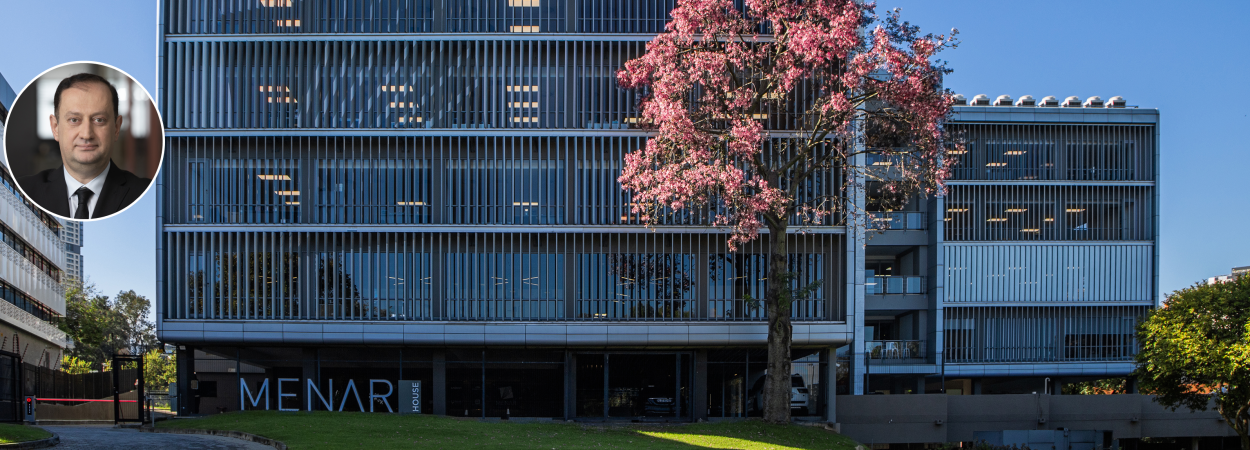
Bayoglu is MD of Menar. The company has invested in the acquisition of manganese smelter Metalloys, which has since been renamed Khwelamet.
This opinion piece was published in the Mail & Guardian: https://mg.co.za/thought-leader/opinion/2026-04-17-eskom-still-backbone-of-economic-recovery/
Categories: Opinion Pieces

