Crises highlights need for joint efforts to maintain industrial competitiveness
Last year ended on a bittersweet note for South African chrome smelters. The bitter part was that Eskom power prices had surged to the point of forcing smelters to reduce capacity, retrenching thousands of people, and threatening to put a nail in the coffin of whatever little was left of the country’s already ailing core beneficiation industry. It was a culmination of a slow, seemingly terminal de-industrialisation.
The sweet part came in the form of an undertaking by the government and Eskom, to ask the National Energy Regulator of South Africa (NERSA) to amend its tariff structure to make smelters more competitive. A long-term solution to ring-fence dedicated coal-fired power supply to smelters is also under discussion.
The market expects that in first quarter of the year the bitter part will be eliminated and the sweet will remain, due to a viable solution crafted with pragmatism and the national interest in mind. We have the resources to launch a smelter renaissance: a revived Eskom, abundant thermal coal, anthracite, mineral ores for beneficiation, furnaces, a work force, institutional memory and the industrial skill set are all in place.
What is yet to be demonstrated is smart, quick coordination of all the capabilities by a capable state in its capacity as a regulator and policy maker. To get there we must remember what brought us to the crisis so that we don’t repeat the mistakes of the past. The following flaws led to the crisis:
Policy oversight: When Eskom started loadshedding it should have been clear to the government that deindustrialisation would be the logical outcome. The main reason for Eskom’s establishment in 1923 was industrialisation. Steel manufacturing was a direct consequence. An economy anchored on what became a mineral energy complex evolved.
Eskom’s challenges meant that this would unravel. But while the government was under popular pressure to turn lights on for households, there was no equivalent focus on industrialisation. Private industries were not allowed or encouraged to build their own coal-based private electricity to make up for Eskom’s weakness.
Climate change missteps: Eskom’s challenges coincided with the rise of the climate lobby, whose message was unequivocal: eliminate coal-based power. Trying to revive Eskom, they said, was like flogging a dead horse. They are eating humble pie now.
It was not just the lobby at the fringes of policymaking that believed this. Policy makers, including those with the responsibility to create an environment for industrialisation, such as former Eskom CEO Andre De Ruyter, believed Eskom’s time was up.
But they feigned ignorance of the fact that mineral beneficiation required abundant, cheap, and constant power supply, which solar power could not provide. Coal-fired power plants needed to be maintained, expanded, and modernised.
Yet the government’s commitment to fix Eskom, meant that, if successful, smelters could benefit. The Negotiated Pricing Agreements with some smelters signed in 2023 didn’t lead to competitiveness as the sector became distressed. Yet once loadshedding was behind us, its consequences remained unaddressed.
Failure to consider the effect of higher Eskom tariffs: Loadshedding exposed Eskom’s inefficiencies, while delays in completing new power plants and procurement irregularities have proven costly.
The net effect of this and the on-boarding of the early renewable independent power producers made power more expensive. Eskom raised revenues not by selling more electricity, but by asking NERSA to approve higher tariffs. For the past 16 years, Eskom’s annual tariffs increases have averaged 12. 75 percent, more than double the rise in the consumer price index. Yet as the higher tariffs took hold, our policy makers slept on the job, forgetting to check the implications for industrialisation.
Stiff Competition
Since South Africa’s manufacturing base was built on cheap and reliable power, higher power prices have choked the competitiveness of smelters. That coincided with stiff competition from Chinese smelters benefitting from cheap coal power, which they have continued to expand. Decoupling electricity provision from industrialisation. This month marks the first anniversary since President Cyril Ramaphosa spoke passionately at an ANC public meeting in Cape Town about the importance of beneficiation.
Months later, smelters have shut down, and thousands of people have lost their jobs. This means state officials didn’t advise the president of what needed to be done to turn his promise into reality. Had they done so, he would have known that competitive electricity tariffs were crucial, and he would surely have acted accordingly.
Lack of a comprehensive view of the smelting industry as an ecosystem. This could be a result of coordination failures within the government’s economic cluster. As the government and industry are trying to find a solution, a moral question has been raised. How could households subsidise industry?
In the words of Electricity Minister Konietzko Ramakgopa, nothing is for free. Sure, in business everything has a price. Ironically, the legacy of Eskom’s challenges – for which the government is not an innocent party – didn’t come free. We are paying with job losses and the unforgivable loss of industrial capacity. The moral question doesn’t belong here. We must be pragmatic. We either want to have industrial capacity and beneficiate our minerals as the president has promised, or we close shop and ship all ores abroad. The latter would obviously amount to economic suicide.
Private industry would have been capable of providing its own power had government policy shown appreciation of the beneficiation ecosystem that encompasses, smelters, mining, and power supply. In its submission to NERSA, Eskom acknowledged the hardships smelters are undergoing and stated its intention, with the Department of Electricity, to help preserve South Africa’s industrial base. Clearly a solution is in the making.
But to avoid uncertainty and interruptions of output, all stakeholders must work on an ongoing market assessment. Making smelters competitive cannot be left to the smelter operators, Eskom or the government. And it should not be ad hoc. It must be a joint and consistent effort from all parties. The government must create a platform to ensure continued competitiveness. It’s in the national economic interest to do so.
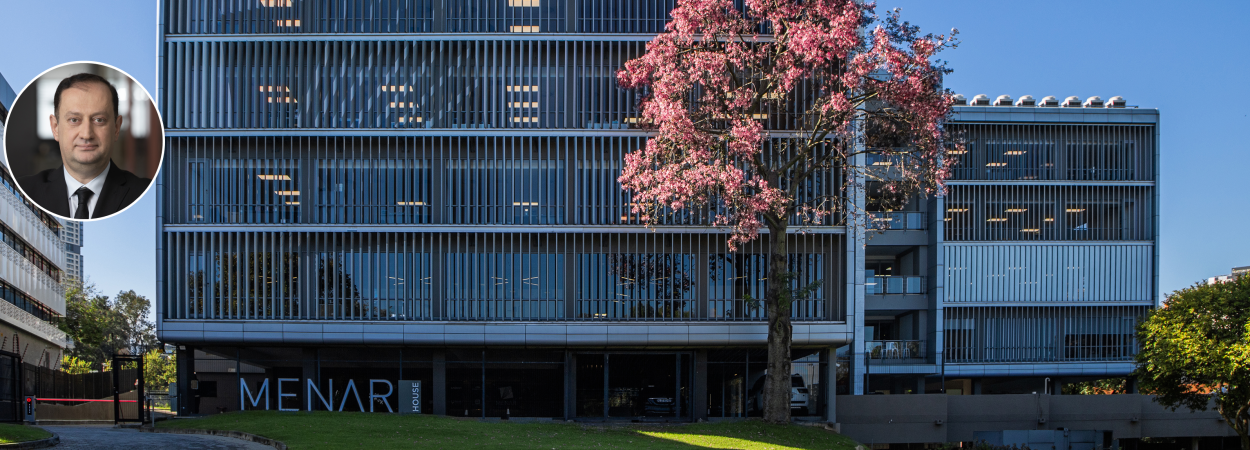
Bayoglu is the MD of Menar, an investment company with interests in mining and ferromanganese production.
This opinion piece was published in Business Day.
Categories: Opinion Pieces
 Vuslat Bayoglu