U.S businesses see mutually beneficial value in South Africa
The year 2025 began with two important developments that tell a story about the complex relationships — political and commercial — between the US and South Africa.
Donald Trump was inaugurated on January 20. Three days later, Coca-Cola, America’s largest soft drink multinational, and South African Rugby announced an investment in the form of sponsorship for the Springboks.
Coincidentally, the four-year deal corresponds with Trump ’s presidential four-year term. Since his inauguration, Trump has earned a reputation in South Africa as a racially divisive figure who lies about white genocide. He even invented an exclusive refugee programme for the imaginary “victims ”.
On the other hand, by striking a partnership with the Springboks, Coca-Cola has taken a positive stand not only about South Africa but about its own corporate aspirations. It sees immense value in associating with our world rugby champions, who are the symbol of the country ’s rich talents, pooled from diverse communities.
The Springboks bust the myth of racial intolerance and genocide that Trump and his South African right-wing supporters are peddling. They symbolise national unity. Trump ’s attempt to undermine South Africa is in sharp contrast to the enthusiasm expressed by Coca-Cola and other US multinationals that have shown confidence in South Africa.
BlackRock, the largest US investment firm, now holds the biggest share of Eskom’s foreign bonds. US retail giant Walmart has begun rolling out stores in South Africa, having acquired wholesale group Massmart a few years ago. It has stated that it seeks to champion “inclusive growth”.
The big US banks are also rooting for South Africa with their money. Citigroup has increased its stake in Absa to 5%. Goldman Sachs, which held an investment conference in South Africa, has increased its client base. And automaker Ford is expanding its production line in Pretoria.
These and other US companies are led by smart leaders who see mutually beneficial value in South Africa. They are not saying we are perfect. No country is. While Trump talks and acts negatively, US companies act positively. The country’s corporate diplomacy differs sharply from Trump’s arbitrary politics.
Trump is not alone in his misguided views. He is in the company of a small but loud group of white Afrikaners who moan about the democratic dispensation while displaying unashamed apartheid nostalgia.
They refuse to acknowledge that the political deal that Nelson Mandela and the ANC struck with their apartheid-era oppressors protects property rights, including land ownership. Expropriation for various legitimate purposes is a tried and tested method of acquiring land all over the world, including in the US. In South Africa, we have the advantage of an independent judiciary to adjudicate disputes that may arise regarding the quantum of compensation.
It is ironic that AfriForum and Solidarity would choose to lobby Trump’s US to take a stance against South Africa by spreading lies about land expropriation as if it were some random thing that can be done outside judicial review. There has never been arbitrary expropriation in South Africa, and it’s not about to happen.
The right-wing groups even went to the extent of erecting banners for G20 visitors to see, claiming that South Africa was governed by race-based policies. Instead of blaming the apartheid regime for saddling democratic South Africa with racial imbalances, the right-wing lobby groups are condemning the democratic state for attempting to address the apartheid legacy.
Yes, the redress mechanisms aren’t perfect. But leaving the apartheid legacy intact would be dangerous. It could fuel resentment and contribute to instability. Is this what the Right wishes? How else can we explain the glee with which it exaggerates South Africa’s problems by peddling lies and campaigning against its interests?
Despite South Africa’s problems, many of which the country has the capacity to solve, it remains a relatively stable country. It is one in which US companies and others around the world can invest and get returns. Many problems persist — unemployment, crime, corruption and bureaucratic red tape. Yet they do not justify racist and unpatriotic campaigns that seek to divide rather than build.
By campaigning against South Africa, and going around complaining about the mild transformation programmes of the ANC, the right-wing groups are inviting more trouble than they realise.
Their campaigns could trigger the emergence of an extreme version of Julius Malema, who they despise for talking about the nationalisation of land and for occasionally singing “Kill the boer”, an old song that democratic South Africa is happy to ignore in favour of fashionable amapiano, gospel and other genres.
The right-wing groups must not make “Kill the boer” fashionable again with their apartheid nostalgia. We must build on the constitutional foundation of nonracialism. The good thing is that US corporate leaders appear to be ignoring the right-wing groups. By cutting through the lies peddled by Trump and his fanatical supporters in South Africa, by building bridges and making objective investment cases on behalf of their clients and shareholders, US multinationals are showing the way.
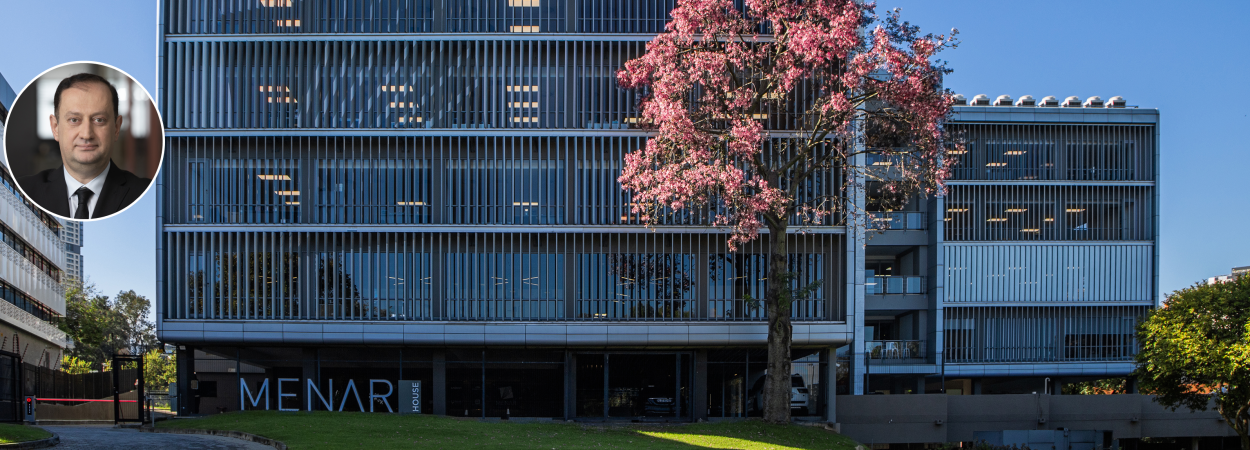
Bayoglu is MD of Menar, a private investment company with interests in coal mining and ferromanganese production. It is one of the private companies that have gained provisional access to the rail network.
This opinion piece was published in the Sunday Times: https://www.sundaytimes.timeslive.co.za/business/news/2025-12-06-follow-the-money-not-trump-co/
Categories: Opinion Pieces
 Vuslat Bayoglu