Coal and renewables can coexist to support a stable power supply through the use of modern technologies.
This useful fossil fuel is moving with the times by adopting modern technologies. And we cannot ignore the importance of baseload power.
When you dish out expert opinions on things you know little about, and no-one objects, your ability to learn becomes limited. I have decided to try to prevent this moral hazard of Tracey Davies (The Clean Coal Myth, On My Mind, September 11-17) from extending to her audience. She expands her untested coal “expertise” to carbon capture, storage and utilisation technologies by dismissing them without scientific reason.
She slams modern technologies with which South Africa’s new coal-fired power stations are fitted, claiming they are “still belching out millions of tons of CO2 as well as deadly sulphur dioxide, nitrous oxide and particulate matter”. But she won’t say who is dead. Nor does she mention that the growth of electricity supply generated from coal has, in fact, improved health-care provision and expanded life expectancy, and fuelled population growth and commerce.
She rubbishes as “old” the significance of baseload power. To be clear, no viable modern economy can run without some form of baseload — whether in the form of coal, gas, nuclear, geothermal, or some combination of these. Unfortunately for Davies, South Africa happens to be endowed with high-quality thermal coal that is easy to mine.
She ridicules FutureCoal, an alliance of global coal producers and associated industries, for highlighting new technologies that allow for coal beneficiation with minimal carbon emissions. This makes her seem like a one-dimensional renewable energy enthusiast keen on writing coal’s obituary.
By demonstrating the importance of new technologies, FutureCoal is, according to Davies, waging a fightback “emboldened by the rise of fact-free discourse across the globe”. She exhorts readers to “not fall for the spin”. Readers need no such exhortation. Access to power when they want it, not only when the weather permits, is non-negotiable.
But it’s the analogy she chooses that is alarming. The coal industry, in her view, is like the 19th-century horse industry that resisted inevitable death when cars became the chosen mode of transport in the US. The analogy is irrelevant to coal. It is conveniently chosen to avoid the real history of coal, which would show that in the 19th century — Davies’s chosen period of interest — coal was fuelling the Industrial Revolution.
Highlighting this basic historical fact would have posed a dilemma for her: how could this deadly fuel be credited with powering steamships, which facilitated international commerce?
Indeed, coal’s evolution has been remarkable: from powering steamships, trains and cars to powering modern bullet trains and the digital revolution with reliable power supply.
The truth is that coal keeps evolving. And its usefulness does not depend on discarding other sources of energy. It coexists with oil, gas, nuclear and renewables. While one-dimensional renewable enthusiasts wish to kill coal, to the detriment of economic competitiveness, those involved in coal’s production and use embrace its evolution and renewables.
In the book More and More and More: An All-Consuming History of Energy, Jean-Baptiste Fressoz states: “Energy sources are more symbiotic than they are in competition, and their symbiotic relationship explains why over the course of the 19th and 20th centuries, primary sources tended to add up rather than substitute each other.”
Fressoz provides empirical evidence that wood, an ancient fuel, remains one of the most used fuels today. Coal didn’t replace it. Oil and gas have not dislodged coal. Nuclear has not dislodged gas, oil and coal. Instead, they all add up.
The increasing usage of renewable energy sources illustrates the point. The bulk of solar panels and wind turbines are made in China using power produced from coal. Polysilicon in solar panels is mostly made using coal-fired power.
China is rapidly increasing its coal-fired energy capacity to keep costs and reliability at competitive levels. Unlike Davies’s 19th-century horse, coal is moving with the times. New technologies are making it possible to burn it while lowering emissions.
Clean coal technologies are already in use around the world, including in China and the US. More research & development is being conducted to improve existing technologies and develop new ones. South Africa is one of the countries involved in this.
These emerging technologies will add to what is already in use. For example, Kusile became the first power station in South Africa to use desulphurisation technology to remove oxides of sulphur from the exhaust flue gas.
Why is Davies not applauding this? It seems she doesn’t want to acknowledge that coal is adaptable to new technological advances and uses. This is not spin. It’s a fact. Embrace it.
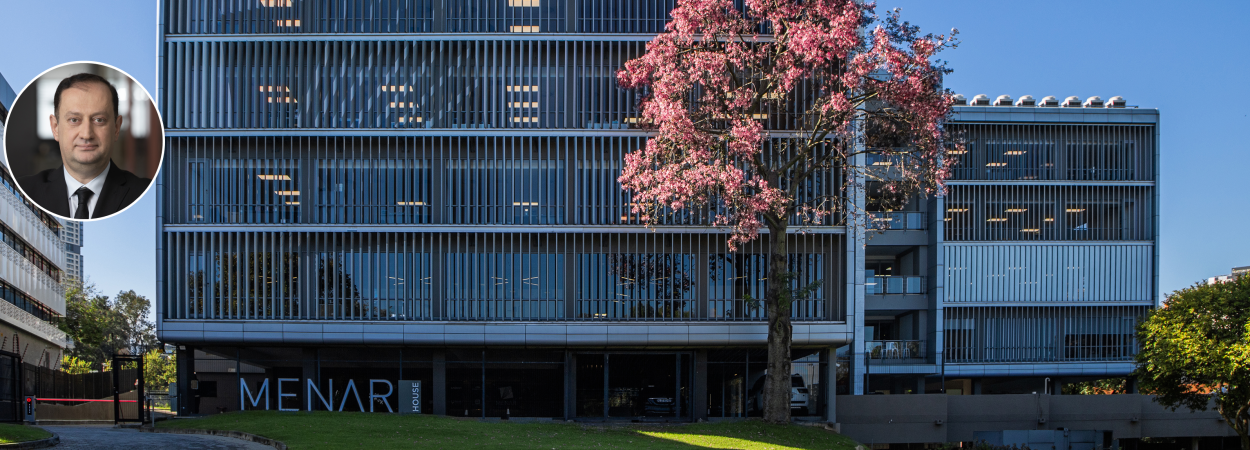
Bayoglu is MD of Menar, a private investment company with interests in coal mining and ferromanganese production
This opinion piece was published in Financial Mail: https://www.businesslive.co.za/fm/opinion/on-my-mind/2025-09-25-vuslat-bayoglu-clean-coal-is-not-a-myth/#google_vignette
Categories: Opinion Pieces
 Vuslat Bayoglu