Losing 14.7% of baseload power that renewables can’t replace, is a real danger
During a recent official visit to China, electricity minister Kgosientsho Ramokgopa ’s shopping list included exploring advanced clean coal technologies that can be integrated into South Africa’s coal fleet. It is encouraging that the consideration of such technologies was part of economic diplomatic engagements between South Africa and China, two friendly nations.
This is in the national interest because the South African economy will continue to depend on coal for decades to come. Coal’s abundance and its baseload capabilities are impossible to ignore. There is no better place to learn the latest advanced clean coal technologies than at the world’s biggest manufacturing hub that continues to ramp up coal capacity alongside increasing installation of renewables.
China has proven beyond doubt that coal baseload capacity and renewable sources of power are not mutually exclusive. The adoption of clean coal technologies must therefore be a pathway for energy transition in South Africa and energy security. This is urgent if Eskom is to avoid being blackmailed to turn its power stations into scrap metal under the guise of implementing an energy transition.
The power utility is set to lose 14.7% of its total nominal capacity of 46,788MW when four of its coal-fired power stations are removed from service in the next five years. Eskom’s oldest plants — Camden, Hendrina, Grootvlei and Arnot — with a combined capacity of 6,900 MW, face possible decommissioning in 2030 as Eskom seeks to “ramp down” coal.
In its 2024 annual report, Eskom says the four plants have survived so far because of the “energy crisis and the delay in new independent power producer [IPP] capacity being connected to the grid”. The assumption is that once IPPs are connected they will replace the baseload power. However, renewable IPP capacity cannot replace baseload capacity because solar and wind depend on the moods of the weather.
Eskom says that through the just energy transition it will implement projects for “repowering and repurposing of these stations to mitigate the associated socioeconomic impacts on affected communities of the eventual ramp-down of the coal industry”. It’s not clear how the repowering and the repurposing will occur.
There are three options that have been spoken about lately. One of them was highlighted by Ramokgopa previously when he said coal plants could be repurposed as gas-fired power plants. However, he hasn’t said how the country could be protected from the dollarization of electricity prices. Like oil, imported gas is priced in dollars whereas locally sourced coal is priced in rand. Nor is there evidence of access to gas or the infrastructure required for storage at huge scale.
By putting clean coal technologies on his agenda, Ramokgopa has raised hopes of a second option: to prolong the life of Eskom’s power stations through technological modernisation. This would mean retrofitting the old power plants, thus prolonging their service in an environmentally sustainable manner.
The third but disastrous option is the “Komati scenario ” where the decommissioning of the coal plant, with the resultant loss of 1,000MW of generation capacity to make way for solar generation, left surrounding communities in economic hardship. The good news is that this scenario is losing support among Eskom’s leaders, who recently told parliament that the pending repurposing of coal-fired power stations would be “decoupled ” from the energy transition.
Ramakgopa also signed a nuclear energy co-operation agreement with China for the construction of modular nuclear reactors. It’s good that the minister is thinking widely about South Africa’s energy options.
While the Integrated Resource Plan is often cited when nuclear and gas options are discussed, it’s provision for additional coal capacity is usually ignored. We must not lose sight of the fact that the IRP makes provision for additional coal capacity and that Mineral & Petroleum Resources Minister Gwede Mantashe has affirmed coal as a critical mineral. Interestingly, he and US President Donald Trump agree on this point.
Unfortunately, the government doesn’t have the luxury of dilly-dallying on energy decisions. Eskom’s power plants, the backbone of the economy, need urgent attention. Despite its many challenges due to bad decisions in the past, the Eskom’s coal fleet is the solution to South Africa’s energy demands.
If the idea of modernising and retrofitting them with advanced clean coal technologies is taken to its logical conclusion, the energy trilemma which Eskom correctly defines as the need to balance energy security, affordability and sustainability, can be resolved quicker.
Of course, the government doesn’t have money to invest in modernising and retrofitting the power stations. But it has a formula in other economic sectors: where it lacks financial capacity it invites the private sector to partner and invest. It is happening in ports and rail.
So, there is good reason for the government to consider inviting private players to partner in modernising and retrofitting of power plants to prolong their lifespan and reduce emissions. Until the government opens this route, it would be impossible to make a final call on how best to replace the 14.7% of Eskom’s baseload capacity that we are in real danger of losing.
Modern technologies could help improve the efficiency of the plants and boost their productivity, in addition to prolonging their lifespan. Given the fact that government processes on complex issues such as seeking partnerships with private sector players often take time to conclude, testing the market should have long been in motion. This requires a policy decision.
If appetite exists, potential investors would need time to investigate commercially viable technological options. But for each day that passes without a decision, we are losing valuable time and investment to boost reliable power generation. And we are delaying much-needed radical economic growth that can solve crippling unemployment and poverty. Nevertheless, Eskom’s leadership and Minister Ramokgopa appear to be realistic about the country’s energy needs.
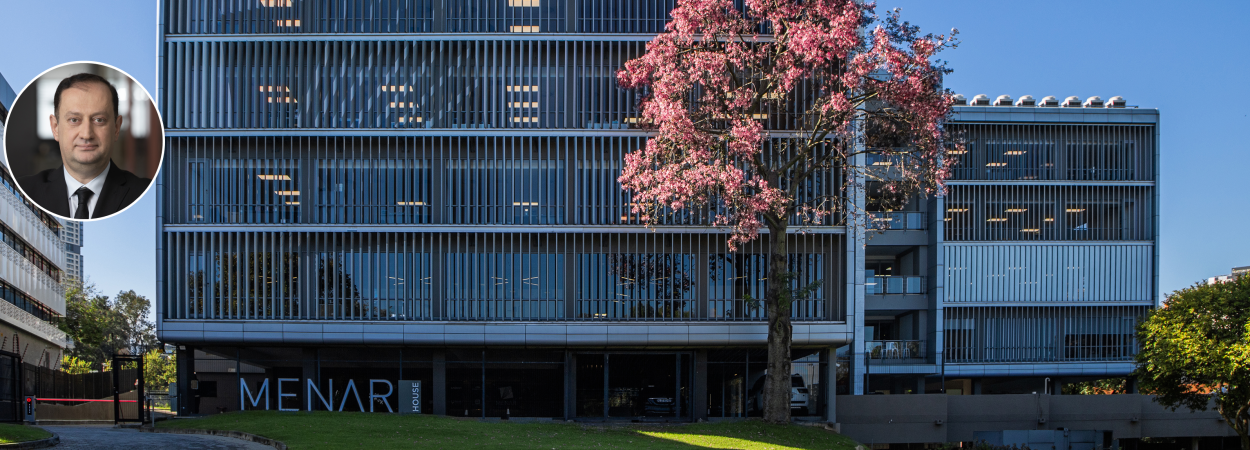
Bayoglu is MD of Menar, a private investment company with interests in coal mining and the ferromanganese sector
This opinion piece was published in the Sunday Times: https://www.timeslive.co.za/sunday-times/business/business/2025-05-18-encouraging-signs-of-realism-over-coals-future/
Categories: Opinion Pieces
 Vuslat Bayoglu