SA can still rely on the strength of mining to carry it to greater heights, provided we deal with obstacles standing in the way of the country’s growth.
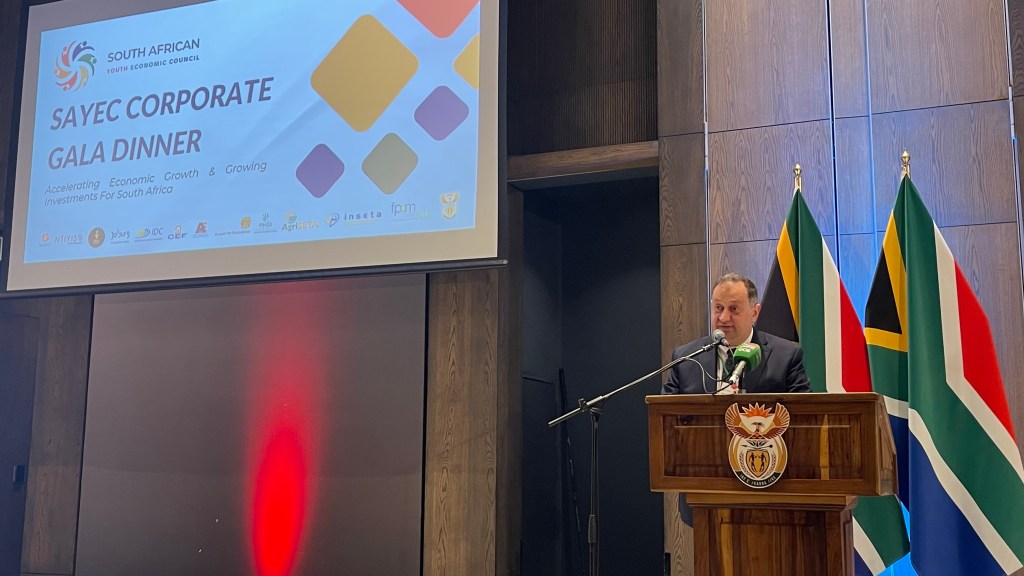
I agree with World Bank description of South Africa’s economy as ‘a sleeping giant on the African continent.’ While giving a speech at the SA Youth Economic Council, I used this description to reflect upon the country’s massive potential that remains untapped as loadshedding, infrastructural backlogs and freight-rail bottlenecks, amongst other obstacles continue to stifle the country’s growth. It also speaks to the resilient nature of our country and its people, meaning that the symbolic giant can still be awakened, if necessary, action is taken.
Part of the country’s potential lies in its unexplored mineral reserves. We are home to high quality minerals such PGMs, iron ore, coal, chrome, uranium, diamonds, manganese, coal and more. We have experienced miners with established research institutions, but we have not taken full advantage of the vast wealth in our backyard. Supporting exploration in the critical minerals sector will set SA on the path to feature prominently in 4IR value chains.
To show our commitment to economic growth, our company, Menar invests heavily in new mining projects. This includes R1.4 billion pledged at the 2023 South Africa Investment Conference hosted by President Cyril Ramaphosa to develop Gugulethu Colliery in Hendrina and Thuso Colliery in Bethal. Gugulethu alone will employ 400 people. If the Department of Water Affairs did not reject our Water Use Licence application, we would have pledged an additional R5.7 billion to develop the Bekezela mining project in Springs. Hopefully, we will get the licence soon, allowing us to create an additional 800 jobs.
The Zululand Anthracite Colliery in KwaZulu Natal employs more than 1000 people. We are expanding production by establishing new shafts. 566 jobs were created through the Khanye coal mine in Gauteng within the past five years. The Kangra mine in Mpumalanga also employs more than 1 000 people including contractors. Investing in new projects and reinvesting in existing ones, to either extend the Life of mine or expand, is an important part of our overall strategy. If we get licences from the government, we can double the number of employees in our group from the existing 3500.We are part of a mining sector that is also able to uplift communities through social and labour plan initiatives, making bursaries, learnerships and other training opportunities accessible.
Mining’s contribution and what the industry can achieve if constraints were mitigated
When mining sneezes the entire economy catches a cold! There has never been a time when the economy performed very well without mining’s contribution. And whenever mining output slows or commodity prices are down, the whole country feels it in terms of jobs and low tax revenues to the state. Tax revenue for 2021/2022 was R62 billion higher than anticipated due to high mining commodity prices, according to National Treasury.
Information from SARS indicates the mining sector contributed R89 billion in corporate tax in the 2021/22 financial year. In addition, the industry contributed R28.45 billion toward South Africa’s revenue through royalties in the same period, keeping its contribution to the GDP at 7.53%.
In February the National Treasury projected an increase in mining tax revenue for 2022/2023 due to higher commodity prices. The mining sector accounted for nearly 30% of provisional corporate tax collections. Now, ahead of the Medium-Term Budget Policy statement in October, the National Treasury and SARS are indicating that revenue collection to the fiscus has slowed due to commodity prices and lower export volumes. (Mining has sort of sneezed! This is due to internal and external factors. Internal factors: slow licensing processes and logistics bottlenecks. External factors: global commodity price cycles.)
We want to be part of the solutions to the problems that are within our control. We are doing our part within the industry to help Transnet overcome its challenges. The good thing is that government has promised to cut the red tape on licences. Mining is crucial. According to the Minerals council mining sector contributions include R494 billion toward GDP, more than 475 000 jobs and R878 billion worth of mineral exports in 2022. Coal on its own accounts for more than 90 000 of the jobs created through mining.
The mining sector and South Africa’s overall economy can achieve greater heights if decisive action is taken to remove impediments such as red tape in licence application and logistics bottlenecks are cut off. The critical issue here is that government must take decisions and provide leadership. One of the decisions that the government must make very clearly and implement is allowing private businesses to invest where government is struggling, for example in rail, ports, energy generation and infrastructure in general through arrangements that benefit the economy, not few individuals at the expense of the economy.
I was pleased to learn through a media interview that Deputy President Paul Mashatile has been assigned to oversee the process of the implementation of government decisions. We hope to see results of the new approach so that we can invest, create jobs, and increase revenues to the state to meet its obligations to the country. A decisive government can help us with guidance to increase investment. We are also encouraged by the fact that the Deputy President has a business-friendly approach. Meanwhile, the industry remains committed to contributing towards waking up the sleeping giant that is the South African economy. We are mindful of how critical mining is to the health of the economy. Our positive attitude is what drives us to continue to invest. We are not pulling back

Categories: Public Speeches
 Vuslat Bayoglu
You must be logged in to post a comment.