I took part in a panel discussion recently at the Coal and Energy Transition Day
The topic of the panel was ‘The future of coal and the just transition which included a major coal mining company’s CEO and the executive director of South Africa’s Presidential Commission on Climate Change. The representative from the Commission on Climate Change was of the view that the coal industry was “delusional” as he is of the view that market fossil fuels are going to rapidly diminish in the coming decades.
I however pointed out that renewable energy was not, there and in of itself, the panacea to South Africa’s electricity crisis. This is because there are major technological constraints for storage and baseload requirements.
The fact is that baseload generation still requires either coal, gas, oil or nuclear. Therefore, all stakeholders need to have a rational discussion and not behave like cult members, as if it’s a religious topic. We need to leave out our emotional biases and concentrate on the scientific and economic facts, in relation to baseload.
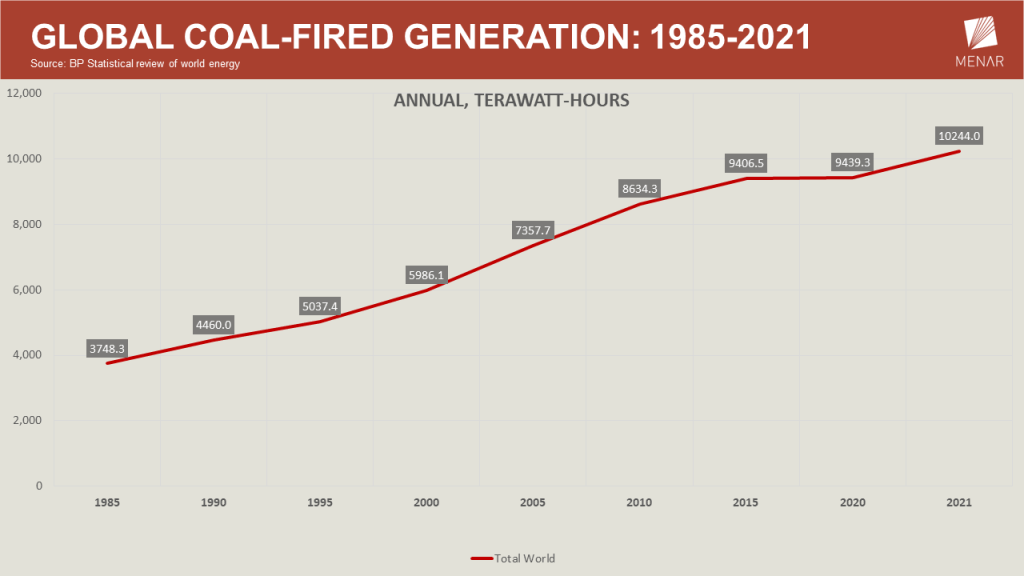
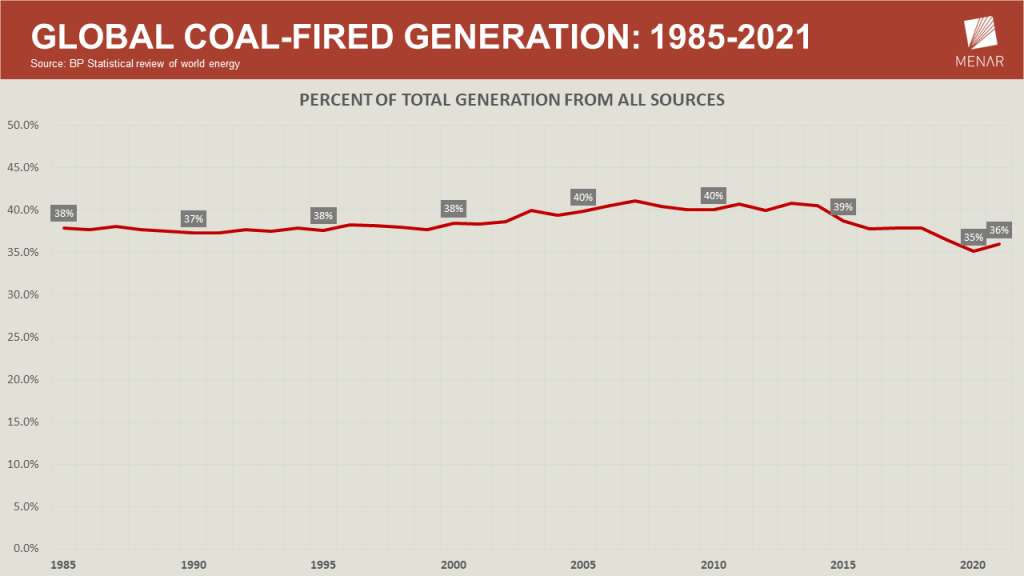
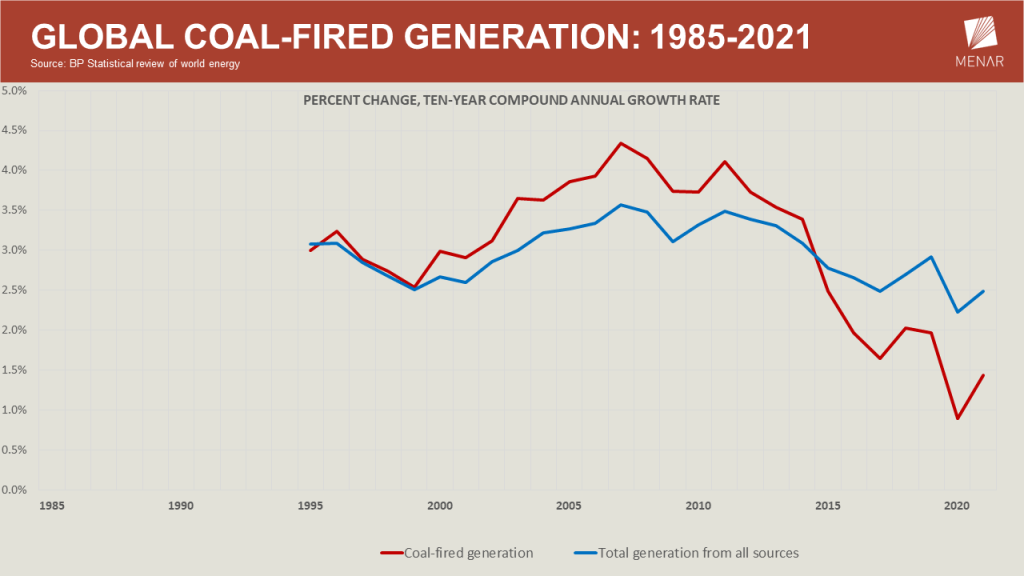
I pointed out that the reopening of coal-fired power plants in Europe was driving demand for coal as the continent needed secure and reliable sources of energy. Furthermore, if you look at global energy demand from 1985 until the present, coal use for energy purposes has continued to grow and currently stands at around 36% of all energy production worldwide.
I presented a graph that showed that global economic growth was closely linked to coal usage. Energy is very important and it is in South Africa’s national security interest to protect this source of power generation. Coal is very important to energy security. If we just take a look at Germany which is reliant on gas and renewables to run its power grid. When Russia started reducing gas supply it had to hastily re-open its coal power stations and now, they’re buying coal from South Africa. The same is true for Denmark, the UK, Italy and other European countries now as well.
The only people that are “delusional” are the ones who think that renewables and the available battery storage technology can provide a suitable replacement for coal-fired power stations in South Africa. Additionally, the biggest battery storage facility in the world is in Florida, in the United States, and it only has 409 MW of capacity. However, there are discussions about South Africa investing in developing 5 000 MW of battery storage. We need to ask ourselves honestly, what if it doesn’t work? Can we handle more Stage 6 load-shedding or worse?
Regarding renewables being South Africa’s saving grace. Let’s look at the realities, we currently have 6 000 MW of renewable energy integrated into the grid and it has done nothing to stop load-shedding. Will another addition make any difference? I have very serious doubts about this.
A separate issue is that of carbon emissions produced by the coal sector. However, the reality is that coal miners do not produce a significant amount of carbon emissions, this is an issue that coal power stations need to address with environmentally friendly technologies.
What is needed by government, in partnership with the private sector, is investment in clean coal technologies in order to support the country’s economic and environmental objectives.
View the presentation below:
Categories: Public Speeches
 Vuslat Bayoglu