The ascendency of Emmerson Mnangagwa as the president of Zimbabwe has rekindled hope among the country’s resilient neighbours for a future anchored on human rights, democracy, economic growth and jobs.
The question that many investors are asking themselves in corporate boardrooms, investors tours and risk assessment plans is whether the hope is misplaced or valid.
Given many years of false promises, economic isolation, governance collapse and erosion of investor confidence, the question is justifiable.
However, Mnangagwa did not waste time to inspire confidence. He has courted both allies and foes of his Zanu-PF party, quickly presenting an image of a unifier and of progressiveness.
He knows better than anyone that he and his fledgeling administration have much to do to convince the world that Zanu-PF has abandoned its penchant for the Big Man politics. He is on track to doing just that, giving himself the opportunity to cast himself as the transformational leader.
Apparently unconstrained by what many would regard as a controversial rise to the top, Mnangagwa has announced several policy reforms that have set Zimbabwe on the right footing. He has moved to fix broken relations with business, both in the country and abroad.
This is important because positive business sentiments at a domestic level tend to rub off on potential international investors, some of whom look to forging partnerships with local counterparts.
He has also taken practical steps to recover money lost to looting as well as assets that were externalised. All those implicated in such activities were named and shamed after failing to beat the 90 days amnesty deadline. In so doing, he has demonstrated his willingness to rebuild Zimbabwe’s balance sheet.
Consistent with this message, the new administration has placed a ban on first-class air travel for all but the president and his deputies. This is a clear acknowledgement of the need for government to pull back on spending, ensure fiscal discipline and focus all efforts on the country’s economic recovery.
One of the causes of Zimbabwe’s socio-economic crisis was over-indebtedness when the government tried to maintain public expenditure while state revenues were declining as a result of negative economic growth. Mnangagwa seems to have figured out that to put the country back on track requires a comprehensive review of economic policies across the value chain.
he has not shied away from addressing the very policies that thrust the erstwhile breadbasket of Africa into controversy: land reform and indigenisation law.
“Is the hope in him misplaced or valid, Vuslat Bayoglu wonders.”
The chaotic manner in which land reform was pursued caused consternation. During the latter parts of the Mugabe years, Zanu-PF presided over the tumultuous land reform programme. White-owned farms were forcibly taken while farmers were left stranded with no compensation for their investments and assets. Mnangagwa has pledged that his government would honour property rights, including compensating farmers.
In a bid to rationalise the country’s policies on land, land ownership is now stratified into categories. The government has introduced a 99-year lease tenure for agricultural land, and leases are transferable. Ownership of non-agricultural land remains freehold.
Clarification of land policies and a commitment from the government to honour the respect property right is evidence that Mnangagwa values the rule of law, which is important to reassure investors.
Mnangagwa is restoring certainty, which is what investors want. It is what they need to take risks and make long-term investments in the country’s economy. Together with the political stability that Mnangagwa is working to establish, the agricultural sector is once again a viable option for commercial farmers and investors.
It is not only the agricultural sector that is getting a new lease on life. Indigenisation law, a thorn in the side of international and domestic investors and corporations who are invested in Zimbabwe, has been relaxed.
Under the indigenisation policy, all enterprises had to cede majority stakes of their businesses to locals. Foreign ownership of local businesses was not allowed to exceed 49%. This made starting a business in Zimbabwe very challenging.
The lifting of this impediment is an invitation to investors and entrepreneurs. It is more evidence of goodwill on the part of Mnangagwa’s administration.
Making the economy work rests on the stability of the political environment. It also rests on friendly relations both at home and further afield. While Robert Mugabe will be remembered for burning bridges, Mnangagwa is the bridge builder. Although Mnangagwa has been part of the Mugabe administration, he has shown that in politics, a leopard can shed its spots.
He extended a hand of mutual co-operation to the opposition – a necessary tone for peace. It is small gestures that can either cause violent conflict or reconciliation. The relationship between Zanu-PF and the opposition has been volatile at worst and antagonistic at best.
It was uncharacteristic of the Mugabe regime to reach out to the opposition, whose leaders he disparagingly labelled puppets of Western governments.
Mnangagwa’s visit to ailing former prime minister and leader of the MDC -T Morgan Tsvangirai marked the turning of a page on a history and culture of intolerance towards the opposition.
This is the beginning of creating an atmosphere for co-operation in the interests of the Zimbabwean people. It is a good foundation upon which to build the political stability that can restore confidence in the economy. This is all the more important with elections just around the corner.
Mnangagwa has reintroduced Zimbabwe onto the world stage by attending the World Economic Forum in Davos, addressing economic and trade issues. This after nearly two decades of avoidable isolation.
It is apparent to him and his government that for Zimbabwe to get back on its feet, it needs to urgently regain access to the lines of credit it lost due to the sanctions placed on the country by the US, Britain and the EU.
The East, especially China, has been a good friend of Zimbabwe during the years of isolation as Mugabe pursued what he called a Look East policy. But rebuilding relations with the West does not necessarily mean abandoning its Eastern friends. After all, East is doing business with the West. What Mnangagwa needs is a delicate balancing act of keeping new friends while winning back old ones. If he uses the post-Mugabe political honey money with the necessary deftness, Mnangagwa is well placed to carry out this dual strategy.
Reaching out to Britain, the EU and US to repair strained relations is a step in the right direction. Zimbabwe will need their support to convince the IMF and World Bank to extend significant development finance. It is about restoring trust.
Image and perception are paramount in politics. So important is the perception that sometimes it supercedes the weight of reality. Mnangagwa’s most difficult task is revamping Zimbabwe’s image and changing perceptions about the country. His first few days in the presidential office have demonstrated that he has what it takes to put Zimbabwe back on track. Neither Zimbabwe nor its neighbours have room for disappointment.
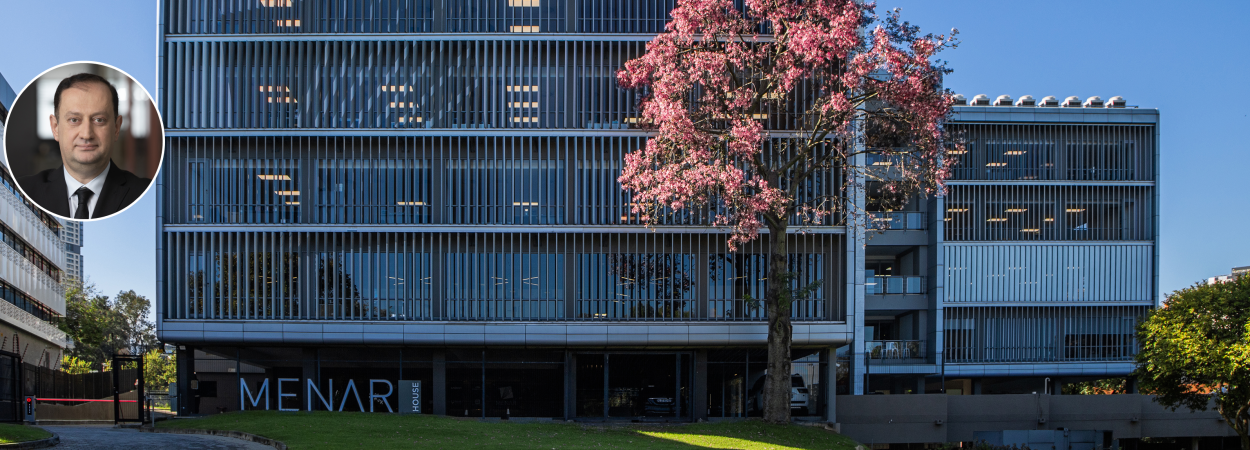
Bayoglu is executive chairman of Menar Capital and Canyon Coal. This article first appeared in the Zimbabwe Independent, the country’s leading business weekly.
Categories: Opinion Pieces
 Vuslat Bayoglu