We can divide the agenda of the public in a country into three main titles. The Past, Today and Future. The Past is more of confronting one’s self. Speaking about today is in the nature of things. To talk about future is to design and imagine. I think this is the least attractive part.
There is a direct relationship between the agendas of the countries and their development levels. The public in underdeveloped countries mostly talks about their past. Countries which make no progress seem to be focused almost only on today. Unlike others, the agenda of developing countries are occupied with future issues as well as the past and today. As South Africa, we should make it “attractive” to speak about future. To leave a better future for the children of South Africa, we have to have a considerable share for future in the country’s agenda. Kodak, began to produce dry plates for photo cameras in 1880 and introduced the first handheld camera to the market in 1888. It was clear from the motto Kodak that it had a vision: “You press the button, we do the rest”.
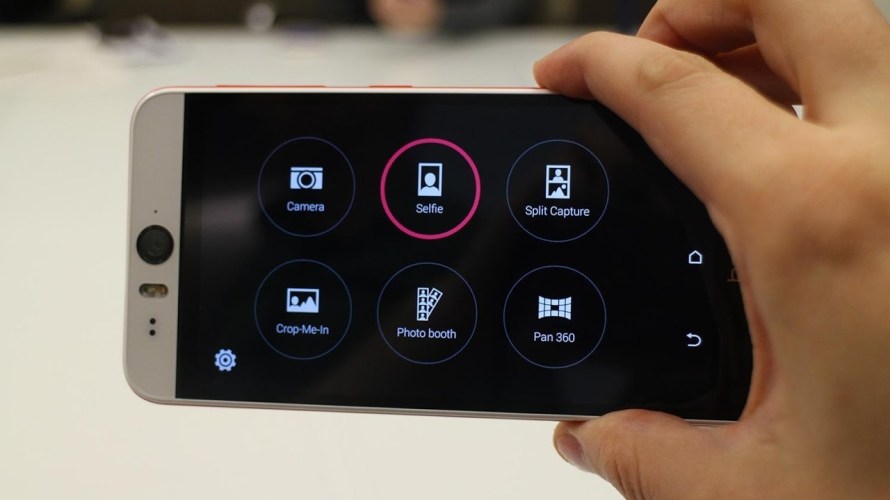
Actually, the vision was to produce cameras with the ease of pushing a button and sell everyone their products at a time that taking a photograph was like travelling to space. And it definitely worked and succeeded. Kodak met the %85 of world’s photo paper demand only by itself. Kodak was the big partner of Fuji with which it shared the world’s photograph film market. According to the December 2, 1996, edition of the New York Times, the most valuable brands in the world were Disney, Coca-Cola, McDonald’s, and Kodak. And Microsoft was in the 9th place in this list.
According to NASDAQ’s 2016 financial reports, Microsoft’s market value is about $485 billion. But Kodak is only $485 million. How did Kodak fail and its value dropped to one in 100 of Microsoft from which it was more valuable just years before? There are only 6100 employees left from more than 100 thousand employees. And the longest page on Kodak’s website today is“History”. Kodak missed the soul of time. Whereas in 1974 it was Kodak who invented and launched the first digital camera to market. At the time, it could only shoot 10 thousand pixels. But today, even basic smartphones have 2-megapixel cameras, which is 2 Million pixels. Iphone7’s tiny integrated camera can shoot 12 megapixels. The world’s largest camera, with 3.2 billion pixels, is attached to a telescope which is now turned towards the space to capture pictures from space in the Stanford University laboratory.
Gordon Moore, one of the founders of Intel, announced the digital law, which would come to be known under his name, in 1965. It is known that if a business runs with chips and microchips, its performance will double every 2 years. At the same time, its volume shrinks and lowers costs. Kodak was so big it couldn’t see the danger on the tip of its nose or its managers made photo printing business as a fetish.
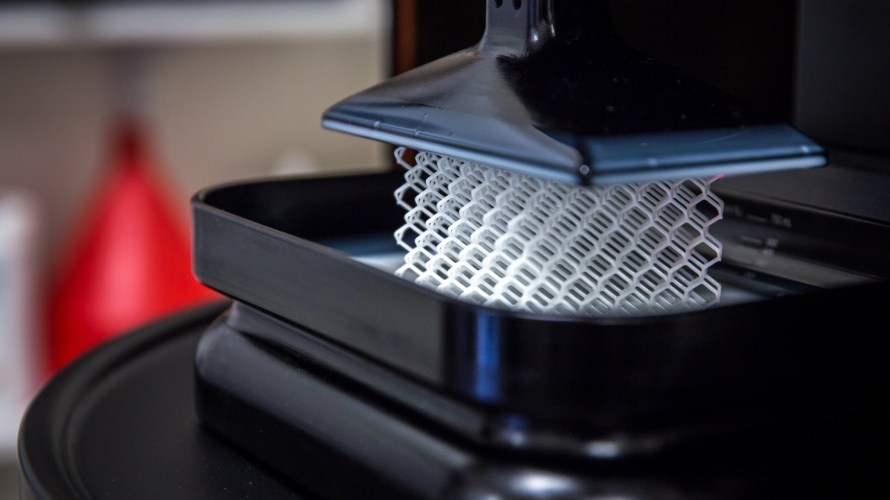
It’s a fact that today almost none of us print pictures but we print buildings. Yes, buildings. A 6-storey building was already printed via 3D-printer in China. 3D printer prices which were about 250.000 ZAR (18 thousand USD) 10 years ago came to a price of 5000 ZAR today and their speed is accelerated by 100 times. Today, space stations are using 3D printers instead of stocking spare parts. In near future, our smartphones will also have 3D scanning technologies. We will scan our feet and print perfect-fitting 3D plastic slippers. I say plastic, but manufacturing of products from fabric and leather as well is not a far future. Indeed, the first 3D jacket was already printed.Yes, it is expensive and not really stylish but let’s remember what Moore said.
Changing paradigm not only shakes the world of electronic devices. The taxi company named Uber owns not a single car. However, it carries customers all around the globe. Even, it prevents people from being cheated even in the streets of cities they have never been to before and without being have to change their own currency.
The option ‘If I can’t do anything, I can be an Uber driver!’ is about to leave from our lives. It is coming very soon. Tesla, a company whose founders inspired for the company name from inventor Nikola Tesla whom Edison was unfair at the time, rehabilitated Tesla’s reputation with its developed and produced electrical and driverless cars. As a result; 14-year-old Tesla is worth $49 billion in comparison to 114-year-old Ford, which is worth 45 million dollars. This means a tragedy for conventional markets but good news for innovators. The driver occupation is about to become history. Today you can rent a car from San Francisco and drive to Los Angeles without even touching the steering wheel and looking at the road. According to “The Butterfly Effect Theory”, in which sectors will the car’s wing flaps turn into a hurricane? Elon Musk, CEO of TESLA, says by 2030, owning a car with driver will be like owning a coach. Therefore, there is no doubt that in a short period of time self-driving cars will take over the roads.
A serious ethical debate has already begun for possible car accidents. Let’s say a pedestrian runs across in front of an autonomous car which is following the speed limit, will the car protect its owner or of the pedestrian? Will it save the lives of 5 people on the road by turning towards the cliff or of the single driver by driving towards the five people? Is it the software engineer or the driver who will be held for the decision the car makes? Lawyers, prosecutors, and judges are wanted who can solve this problem.
Fortunately; 95% of traffic accidents are caused by human error. As the computer that controls the car will not be suffering insomnia, distractibility and as the computer can not be consuming alcohol the risk of an accident will also reduce. This shows that insurance companies that look at us from one of the most splendid skyscrapers in Johannesburg have to move to less expensive buildings since the traffic policy papers will remain in their hands. Insurance companies will not just lose their accident insurances. They will have to cheapen their health care policies as well. The hand-held diagnostic device named Tricorder in Star Trek’s Captain Spock’s hand is coming soon to the pharmacies. This device will only ask for a sample of blood and a blow. I can not imagine of a better mother days gift for the people whose mothers are above 50.
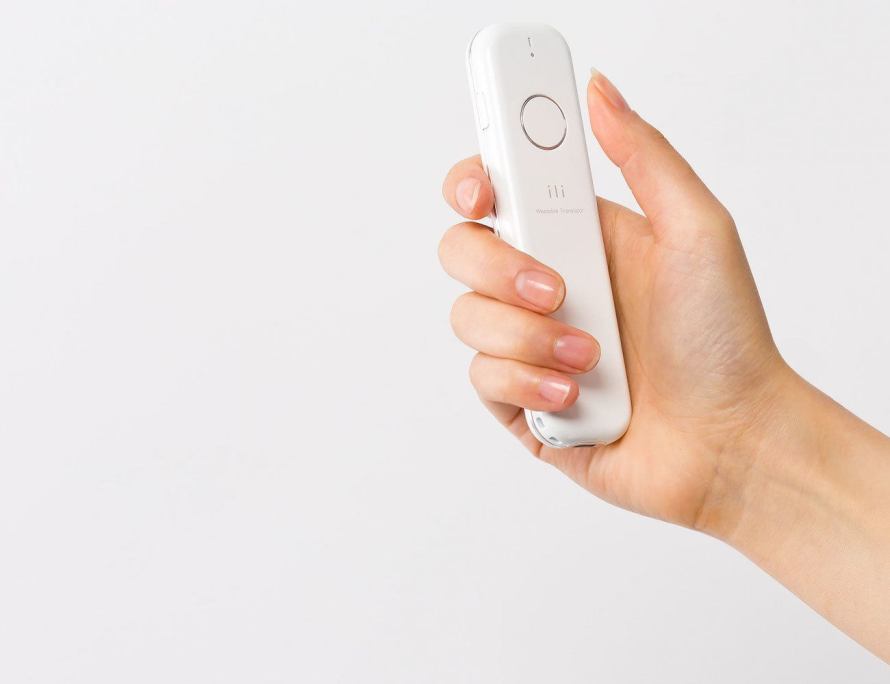
If you think that even Tricorder is out fashionable as it needs a sample of blood and blow to diagnose then you are one of the indigenous people of digital age. We used technology since now, and we will wear it too. In the end, we will carry the technology in our bodies, perhaps the children will bear with it. The tool in the size of the table tennis racket which can diagnose every condition with just a swipe over our body will shrink to a smaller size and even may be placed to our body like dental implants. Why not? Just that? It is not far from us that with a simultaneous translation device to be inserted into our ear we can hear Africans in the original tone of the person even s/he speaks in Zulu. Google does its homework ver well. With the contributions of each of us, Google Translate learns world languages better every day. All of the possible sentences of a language are already available on Google’s servers.
The money which people who go to the United Kingdom to learn English leave is about 3,5 trillion dollars a year. This is good news for the people who go to from America to South Africa, from Malta to the Philippines, just to learn English. However, the language schools, translation and interpreting departments! You should start looking at a second job. Of course except for those who do poetry translations. Because artificial intelligence is haunting every field, but they are restricted in creativity. There is still bright future for artists and creative people. I also live in comfort of being from one of the business sectors which will not lose its importance except for the artists who have bright future and of course skilled engineers interested in high technology.
The technology needs mines no matter what it produces. The importance of the raw material which will become the raw material of high technology after the process has not decreased any even a single day. This makes African continent and of course South Africa sacred lands of near future.
I have news for those who say I am making up. A smartphone application called Moody’s is being developed. In 2020 app users will be able to determine precisely whether that the people we speak to are lying or not from their facial expressions. Those who do not believe to this will have to wait for three years. However, it is not smart to wait for three years taking this development speed into account.
Categories: Opinion Pieces
 Vuslat Bayoglu
You must be logged in to post a comment.